My Little Bilibili Corner
Jun 2023 – PresentVideo creator
I am a senior undergraduate student at Tsinghua University, studying Mathematics and Physics alongside Electrical Engineering. I spent the 2025–2026 academic year as a visiting undergraduate student at Harvard College.
This past summer, I was fortunate to begin working with Prof. Kunle Olukotun and Prof. Olivia Hsu on testing and verification for coding agents, aiming to make agent-generated code more reliable and better aligned with intended behavior. During my visit to Harvard, I was grateful for the opportunity to begin working with Prof. Vijay Janapa Reddi and Prof. Zishen Wan on systems and architecture for embodied AI. Previously, I had the privilege of working with Prof. Yu Wang at Tsinghua on GPU systems and kernel optimization.
I am currently seeking a PhD position starting in Fall 2027, and am happy to discuss potential research fit and collaboration opportunities.
My research aims to enable agent-driven cross-stack optimization for building efficient and reliable AI systems. My current work spans two complementary directions:
Submitted to ICLR 2027 · Under review
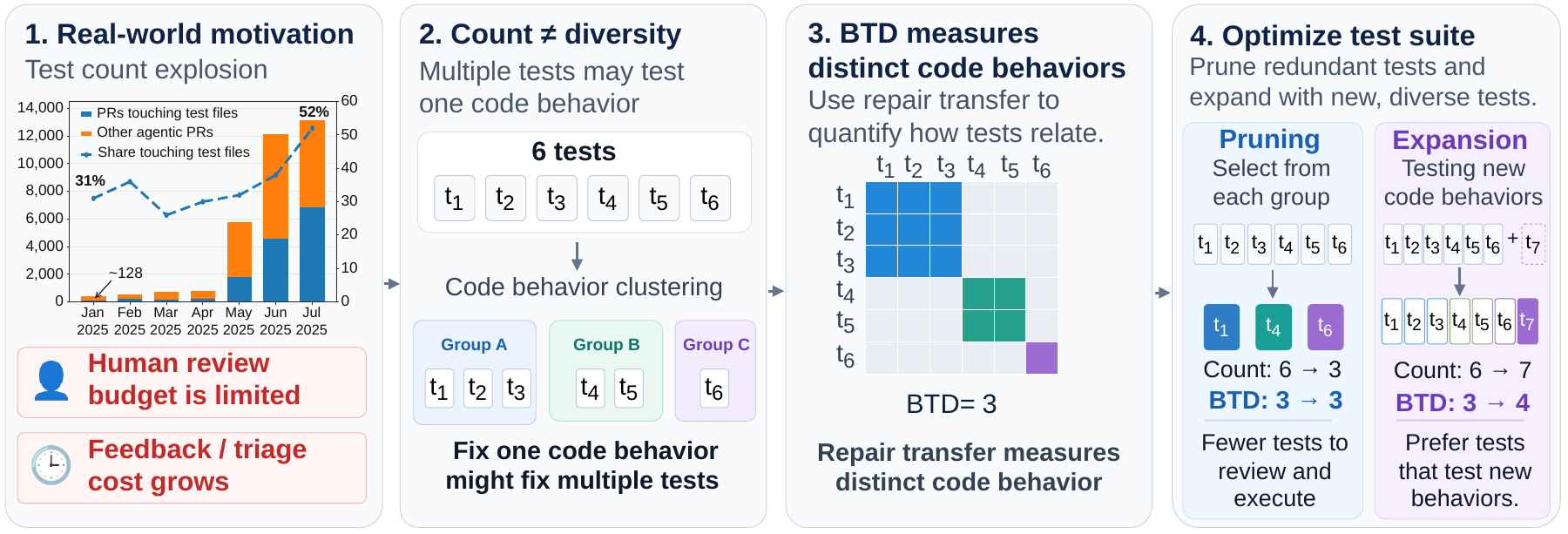
More tests do not necessarily provide coding agents with more diverse behavioral specifications. BTD measures diversity by checking whether a repair for one test also satisfies others, and uses this signal to guide test-suite pruning and expansion.
Submitted to ASPLOS 2027 · Under review
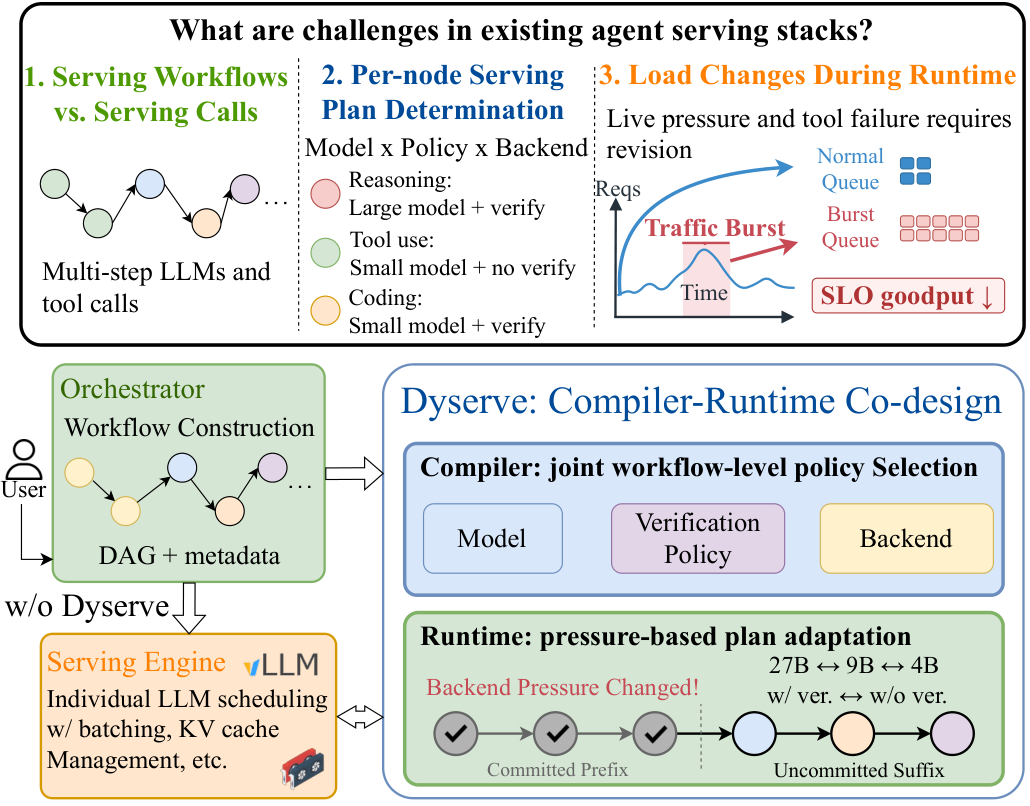
Dyserve jointly optimizes model selection, verification policies, and backend assignment for agentic workflows. A profile-guided compiler and an adaptive runtime coordinate these decisions as serving load changes, balancing output quality, latency, and throughput.
EuroSys, 2026
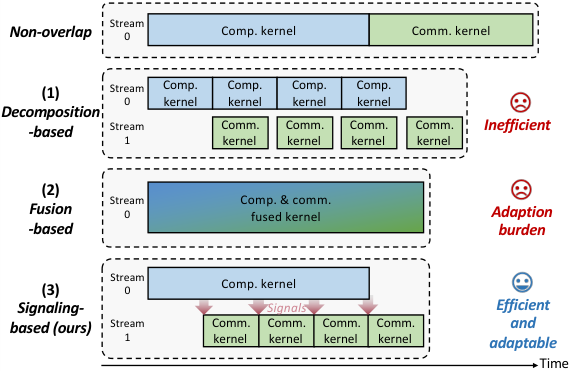
FlashOverlap reduces communication overhead in multi-GPU workloads by allowing completed output tiles to be communicated while computation continues. Tile-level signaling and data reordering enable fine-grained overlap while reusing existing NCCL communication primitives.
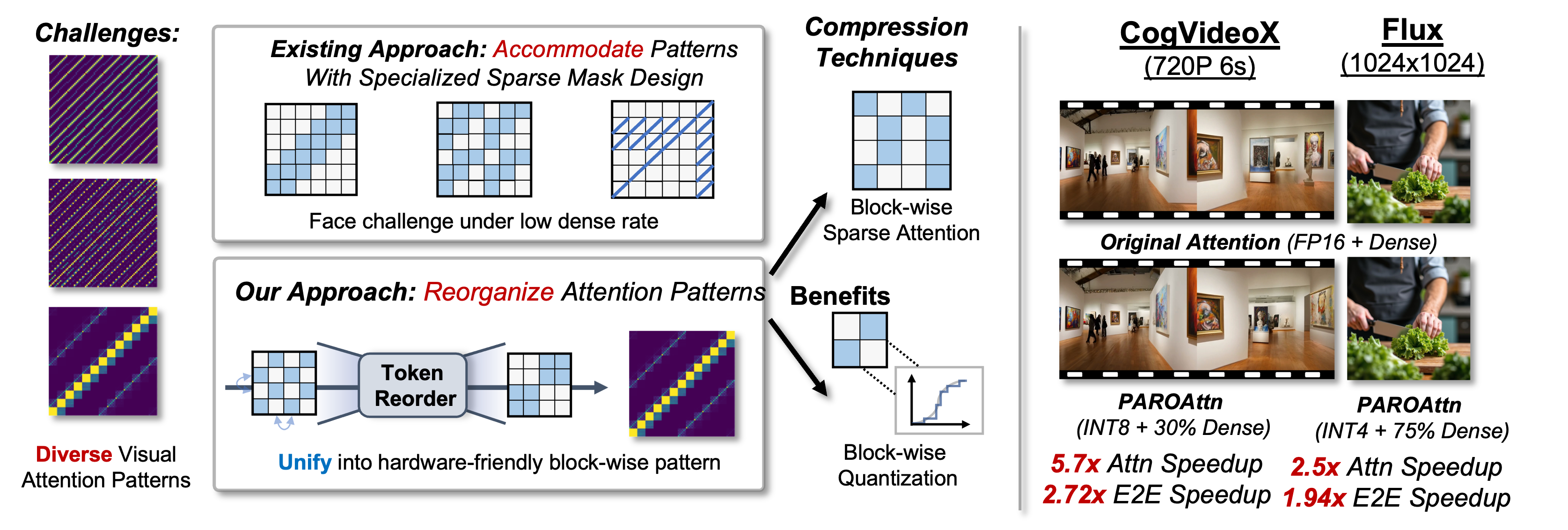
NeurIPS, 2025
PAROAttention reorganizes irregular visual attention patterns into hardware-friendly blocks through token reordering. This structure enables effective sparsification and low-bit quantization, accelerating image and video generation while maintaining generation quality.
Video creator
Founder · Career interview project
Tsinghua University · Program member